
In tea
Let the tea cool until you can sip it. Then stir in a spoonful. Boiling water cooks the honey, and you paid for raw.
Raw Unfiltered Local
I'm Peter. I keep the bees, crank the extractor by hand and fill every jar to the line. The honey is never heated and never blended.
The fall 2026 harvest is in jars now. Pickup around Orlando. Shipping in Florida.
That is my honest answer. It's the difference between a tomato from somebody's yard and a tomato off a truck. Here is the longer version.
| Vineland Honey | Big-batch honey | |
|---|---|---|
| Heat | Never heated. | Often warmed so it runs fast through the filters. |
| Filter | Strained. Comb and bees come out. The pollen stays. | Often filtered fine. |
| Where it's from | One bee yard per bottle. | Many yards and many farms, mixed in one vat. |
| Who made it | Peter. You can message him. | A brand. |
Warm honey gets runny and flows through a filter fast. That is why a lot of honey gets heated. But above 105°F, honey counts as pasteurized. It is no longer raw.
It's like sugar in a pan. Once it turns to caramel, you can't turn it back into sugar.
So mine goes from the frames to a bucket, then through a strainer, cold. Cold honey moves slow. I wait.
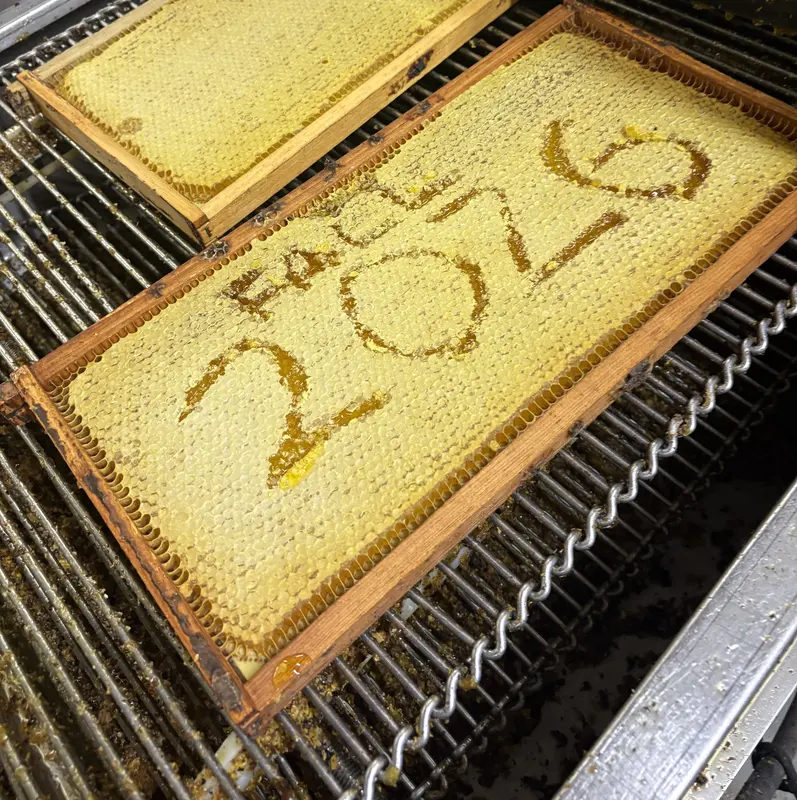
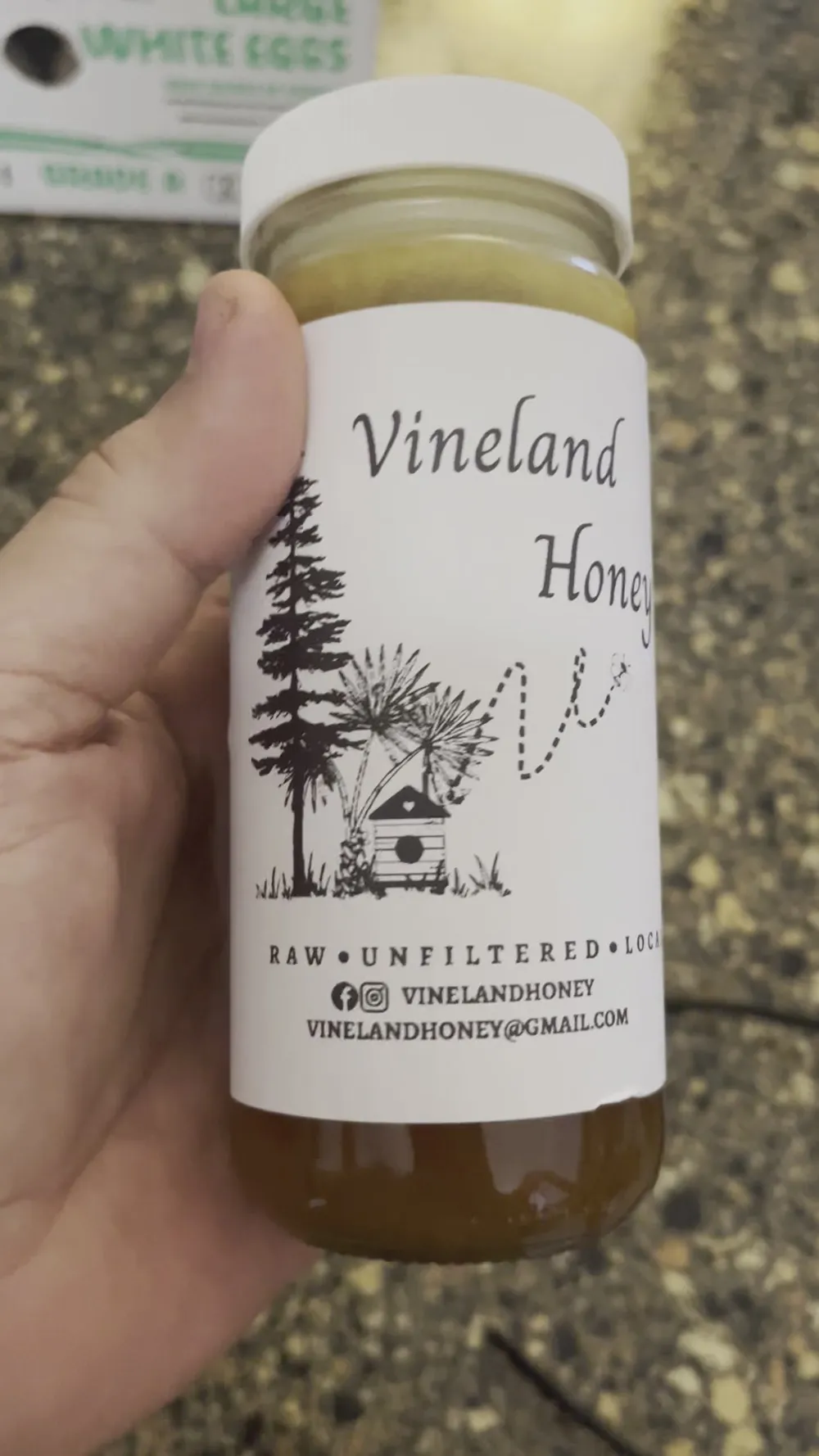
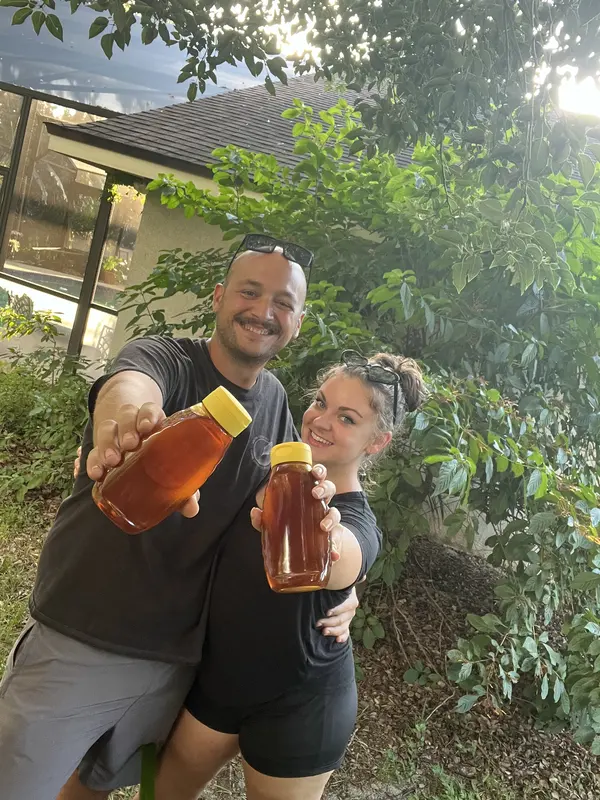
In jars now
Want a jar this week? Message me on Instagram or send an email.
Made in a cottage food operation that is not subject to Florida's food safety regulations.
Every harvest tastes different, so every lid says what the bees were on. This one was blueberry blossom and orange blossom.
From our hive to yours.
My regulars buy one every two weeks. This is roughly how.
Let the tea cool until you can sip it. Then stir in a spoonful. Boiling water cooks the honey, and you paid for raw.
Butter first, honey second. Add a pinch of salt if you want to show off.
Put it next to something sharp or salty. It makes a plain cheddar taste expensive.
I'm a zookeeper. A few years ago, one of the owners at work wanted bees on the property. So I went to a Kissimmee Valley Beekeepers meeting to find somebody who knew what they were doing. Everyone told me the same thing: you need to talk to Jimmy.
Jimmy put hives out there. A few months later I was mowing my yard and saw bees flying in and out of my water meter box. I called Jimmy.
He moved the whole colony into a little five-frame box. Once the queen was in, the rest walked in after her. Then he looked at me and said, “You want to keep them?”
I could not tell you why. I just said yes.
He handed me an old suit, a smoker and a box of gear. Later I started working with him one day a week, and that is where I learned the craft.
That first colony swarmed off in the end. That's bees. A colony is one living thing, and it goes where it wants.
Today it's three hives and a hand-crank extractor. Shannon and I do the rest.
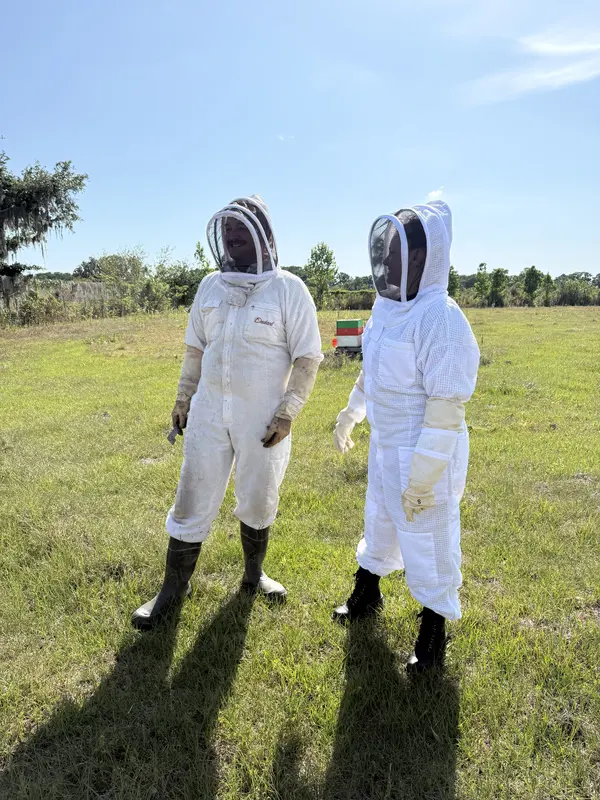
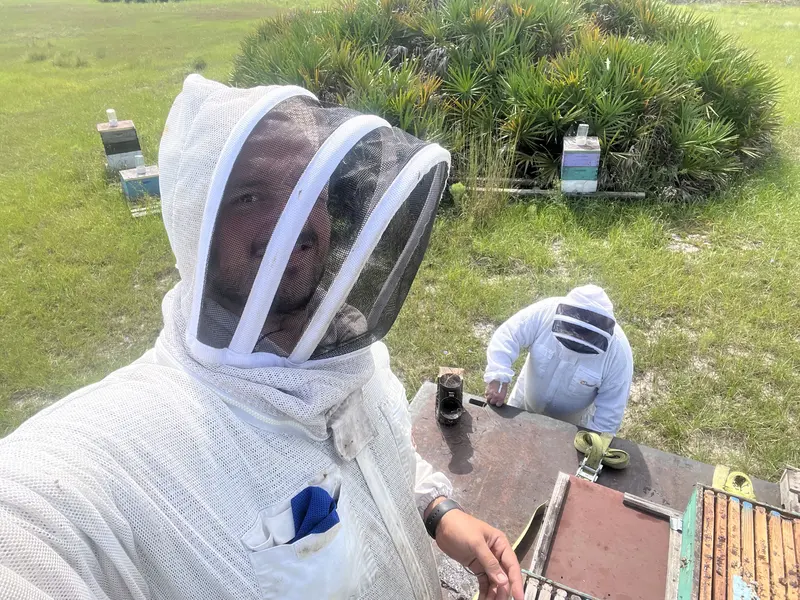
Bees move into walls, logs and water meters. These ones picked a hollow log. I move them into a box where they can stay.
I pull honey about three times a year. The old rule of thumb is Easter, Fourth of July, Thanksgiving. Each pull tastes like whatever was blooming in Central Florida at the time.
Spring around Easter
Orange blossom, blueberry, saw palmetto, wildflower.
Midsummer around the Fourth of July
Mangrove. Dark, runny and slow to crystallize.
Late summer
More mangrove, with sabal palm in the mix.
Fall around Thanksgiving
Brazilian pepper and the other late bloomers. In jars now.
What ends up in my jars depends on what blooms near the hives that year. The bees pick. The lid tells you what they picked.
Three hives sell out. Leave your email and you'll hear when the next honey is in jars, before I post it anywhere else. I only write when there's honey.
No. Raw honey crystallizes. It's normal, and some people like it better that way because it spreads like butter. To loosen it, set the jar in warm water. Warm, not hot.
In a cupboard with the lid on. Honey keeps. Archaeologists found honey in Egyptian tombs, about 3,000 years old, and it was still good to eat. Yours won't last that long, because you'll eat it.
Yes, inside Florida for now. Jars that ship go in plastic bottles so they travel safely. The shipping price will show at checkout when it opens.
Yes. I do pickup and local drop-off around Orlando. Send me a message and we'll set a time and a spot.
Three hives, a hand crank and no heat. Straining cold honey is slow. I tried $10 a pound and could not keep it in stock. I tried $20 and it was too much for the regulars who buy a jar every two weeks. $15 is the number that's fair to both of us.
No. Bees fly where they want, and I can't follow them around with a clipboard. What I can tell you is what I do: no heat, no filtering, no blending.
In winter, yes. Sugar water keeps the colonies healthy when little is blooming. I stop when the flowers come on, well before I pull honey. What goes in the jar is from flowers.
No. Do not give honey to a child under one year old. That goes for all honey, raw or not.